-
Notifications
You must be signed in to change notification settings - Fork 0
Expand file tree
/
Copy pathShare-data-code-presentation.qmd
More file actions
339 lines (228 loc) · 13.1 KB
/
Share-data-code-presentation.qmd
File metadata and controls
339 lines (228 loc) · 13.1 KB
1
2
3
4
5
6
7
8
9
10
11
12
13
14
15
16
17
18
19
20
21
22
23
24
25
26
27
28
29
30
31
32
33
34
35
36
37
38
39
40
41
42
43
44
45
46
47
48
49
50
51
52
53
54
55
56
57
58
59
60
61
62
63
64
65
66
67
68
69
70
71
72
73
74
75
76
77
78
79
80
81
82
83
84
85
86
87
88
89
90
91
92
93
94
95
96
97
98
99
100
101
102
103
104
105
106
107
108
109
110
111
112
113
114
115
116
117
118
119
120
121
122
123
124
125
126
127
128
129
130
131
132
133
134
135
136
137
138
139
140
141
142
143
144
145
146
147
148
149
150
151
152
153
154
155
156
157
158
159
160
161
162
163
164
165
166
167
168
169
170
171
172
173
174
175
176
177
178
179
180
181
182
183
184
185
186
187
188
189
190
191
192
193
194
195
196
197
198
199
200
201
202
203
204
205
206
207
208
209
210
211
212
213
214
215
216
217
218
219
220
221
222
223
224
225
226
227
228
229
230
231
232
233
234
235
236
237
238
239
240
241
242
243
244
245
246
247
248
249
250
251
252
253
254
255
256
257
258
259
260
261
262
263
264
265
266
267
268
269
270
271
272
273
274
275
276
277
278
279
280
281
282
283
284
285
286
287
288
289
290
291
292
293
294
295
296
297
298
299
300
301
302
303
304
305
306
307
308
309
310
311
312
313
314
315
316
317
318
319
320
321
322
323
324
325
326
327
328
329
330
331
332
333
334
335
336
337
338
339
---
title: "Share your data and code!"
subtitle: "CES Skills Seminars"
author:
- "José R. Ferrer-Paris"
- "(a.k.a. Jose Ferrer; JR)"
date: '`r Sys.Date()`'
format:
revealjs:
theme: simple
footer: "CES Skills seminar / 20th April 2023 / JR Ferrer-Paris"
logo: img/ces-logo-transparent.png
css:
- css/logo.css
- css/inat.css
preview-links: true
title-slide-attributes:
data-background-image: "https://inaturalist-open-data.s3.amazonaws.com/photos/268028588/large.jpg"
data-background-size: contain
data-background-color: "black"
data-background-opacity: ".6"
editor_options:
chunk_output_type: console
---
# My observation of the weekend
[{{< fa solid fish-fins >}} inaturalist.org/observations/155084844](https://www.inaturalist.org/observations/155084844)
## Community id {.smaller}
```{r}
#| echo: true
library(rinat)
library(dplyr)
user_obs <- get_inat_obs_user("NeoMapas") %>%
filter(common_name %in% "Girdled Scalyfin")
```
```{r}
user_obs %>%
DT::datatable(filter="none",options=list(searching=FALSE, paging=FALSE))
```
## My collection of observations
```{r}
#| echo: true
#| output-location: slide
library(leaflet)
library(sf)
obs_df <-
get_inat_obs_user("NeoMapas") %>%
select(longitude, latitude, datetime, common_name,
scientific_name, image_url) %>%
st_as_sf(coords=c("longitude", "latitude"), crs=4326)
popup_html <- with(obs_df,
sprintf("<p><b>%s</b><br/><i>%s</i></p>
<p>Observed: %s<br/>
<p><img src='%s'/></p>",
common_name, scientific_name,
datetime, image_url))
leaflet(obs_df) %>%
addProviderTiles("Esri.WorldStreetMap") %>%
addMarkers(data = obs_df,
popup = ~popup_html)
```
# What is Open Science
> Open science is the movement to make scientific research (including publications, data, physical samples, and software) and its dissemination accessible to all levels of society, amateur or professional.
https://en.wikipedia.org/wiki/Open_science
## Why Open Science ? {.smaller}
::: columns
::: {.column width="60%"}
> Open Science has the potential of making the scientific process more transparent, inclusive and democratic. It is increasingly recognized as a critical accelerator for the achievement of the United Nations Sustainable Development Goals and a true game changer in bridging the science, technology and innovation gaps and fulfilling the human right to science.
https://www.unesco.org/en/open-science
:::
::: {.column width="40%"}
<a title="UNESCO.org, CC BY-SA 4.0 <https://creativecommons.org/licenses/by-sa/4.0>, via Wikimedia Commons" href="https://commons.wikimedia.org/wiki/File:UNESCO-Open_science-pillars-en.png"><img width="512" alt="UNESCO-Open science-pillars-en" src="https://upload.wikimedia.org/wikipedia/commons/thumb/d/d8/UNESCO-Open_science-pillars-en.png/512px-UNESCO-Open_science-pillars-en.png"></a>
:::
:::
## But seriously, why?
<a title="Roche DG, Lanfear R, Binning SA, Haff TM, Schwanz LE, et al. (2014), CC BY 4.0 <https://creativecommons.org/licenses/by/4.0>, via Wikimedia Commons" href="https://commons.wikimedia.org/wiki/File:To_deposit_or_not_to_deposit,_that_is_the_question_-_journal.pbio.1001779.g001.png"><img width="512" alt="To deposit or not to deposit, that is the question - journal.pbio.1001779.g001" src="https://upload.wikimedia.org/wikipedia/commons/thumb/6/65/To_deposit_or_not_to_deposit%2C_that_is_the_question_-_journal.pbio.1001779.g001.png/512px-To_deposit_or_not_to_deposit%2C_that_is_the_question_-_journal.pbio.1001779.g001.png"></a>
## We all benefit from Open Science
- Everybody wins
- Be **more efficient**
- Avoid common problems / **find solutions faster**
- Increases **collaboration**
- **Contribute** what you can, **use** what you need
- Get **credit for your work**
::: aside
Emma MacKenzie, Sophie Winterbourne, Felicity Anderson, Edward Wallace; The benefits of an open-science approach in student research projects. Biochem (Lond) 23 December 2021; 43 (6): 66–73. doi: https://doi.org/10.1042/bio_2021_198
:::
---

# {{< fa book-open-reader >}} Prepare yourself
To maximise discovery and reuse you should employ best practices in preparing and publishing your code and data to make it [*F*indable *A*ccesible *I*nteroperational *R*eusable](https://www.go-fair.org/fair-principles/).
## {{< fa book-open-reader >}} Think about
### Intelectual property
### Data availability policies of journals/funders
### File formats
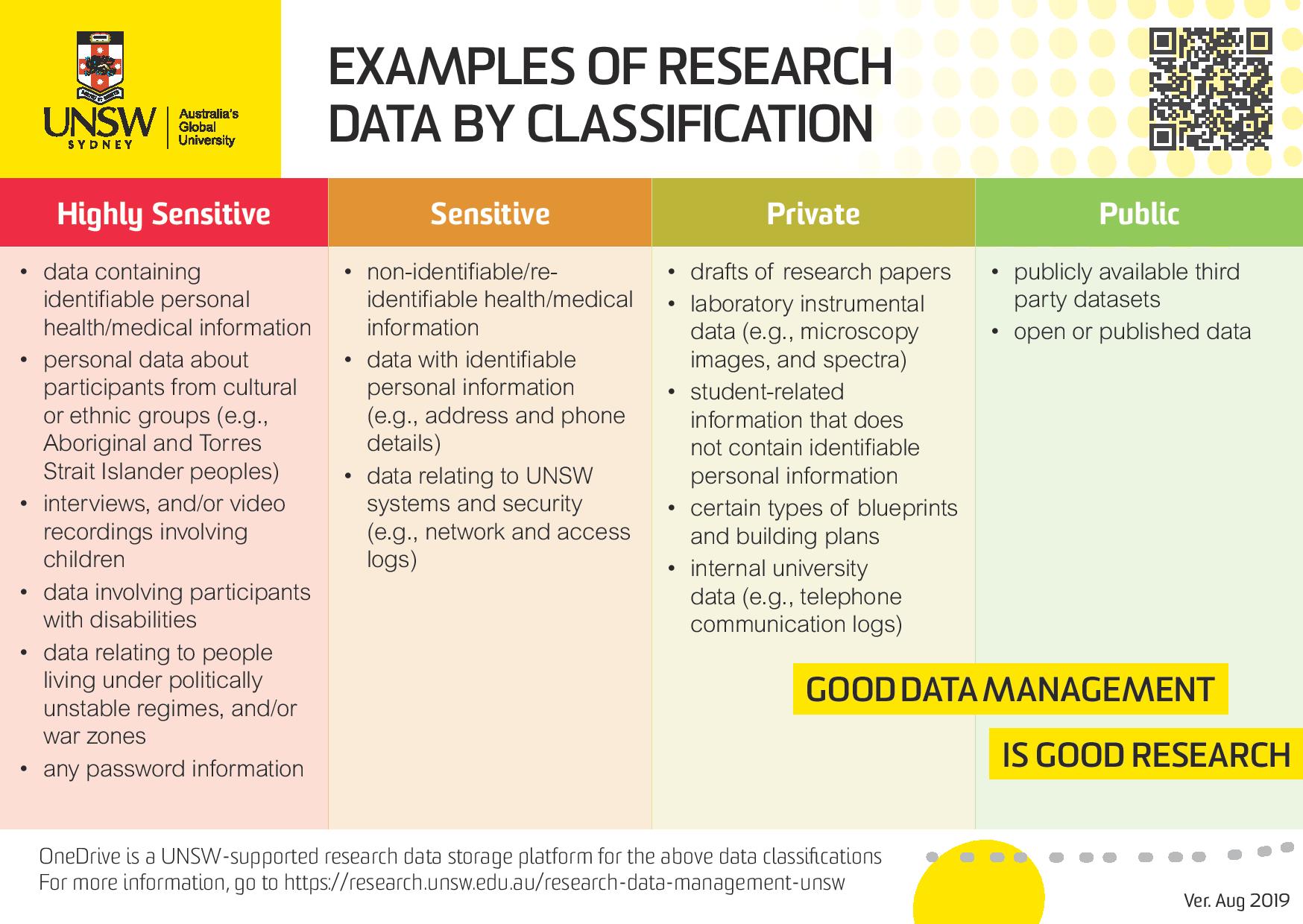
### Do you work with [sensitive data](https://research.unsw.edu.au/handling-sensitive-data)?
:::aside
Check also ARDC's [Research Data Rights Management Guide](https://ardc.edu.au/resource/research-data-rights-management-guide/)
:::
---
## {{< fa book-open-reader >}} Persistent identifiers
:::: r-stack
::: {.fragment .fade-out}
### Identify yourself
Use a unique identifier like ORC{{< fa brands orcid >}}
<blockquote class="twitter-tweet"><p lang="en" dir="ltr">Should I pronounce <a href="https://twitter.com/ORCID_Org?ref_src=twsrc%5Etfw">@ORCID_Org</a> as orchid or orc-I-D? The latter seems like an evil Tolkien monster. <a href="https://twitter.com/hashtag/DigID17?src=hash&ref_src=twsrc%5Etfw">#DigID17</a> <a href="https://twitter.com/hashtag/DHSI2017?src=hash&ref_src=twsrc%5Etfw">#DHSI2017</a></p>— Dr. Laura Estill (@Laura_Estill) <a href="https://twitter.com/Laura_Estill/status/874688177910431745?ref_src=twsrc%5Etfw">June 13, 2017</a></blockquote> <script async src="https://platform.twitter.com/widgets.js" charset="utf-8"></script>
:::
::: {.fragment .fade-in-then-out}
### Identify your institution
UNSW Sydney:
- Research Organization Registry [ror.org/03r8z3t63](https://ror.org/03r8z3t63)
- Wikidata [Q734764]([https://www.wikidata.org/wiki/Q734764)
:::
::: {.fragment .fade-in-then-out}
### Identify your data
A Digital Object Identifier (DOI) is a unique, persistent identifier for research outputs.
:::
::::
## {{< fa book-open-reader >}} Ask for help!
### Multiple resources available at UNSW
[Research Technology Services (ResTech)](https://research.unsw.edu.au/research-technology-services-restech)
[UNSWorks](https://unsworks.unsw.edu.au) is UNSW’s [open access repository](https://www.library.unsw.edu.au/research/publishing-and-sharing-your-research/open-access).
<div>
<span style="vertical-align: top;">[UNSW codeRs](https://unsw-coders.netlify.app/)</span>
{height=50}
</div>
# {{< fa solid code-branch >}} Share your code
Shared code helps you and your collaborators to analyse and/or visualise your data. It supports validation of your findings and help others to build upon your work.
## {{< fa solid code-branch >}} Why?
1. Encourage reproducibility
1. Meet journal/funder requirements
1. You'll learn a lot
1. Extend the half-life of your research
1. Be more employable
::: aside
Check this [blog post](https://towardsdatascience.com/how-and-why-to-share-scientific-code-64fbd385a67) from Nathan C. Frey
:::
## {{< fa solid code-branch >}} Version control, please!
You can use any flavour^[`git`, `svn`, or whichever else is out there] of version control you like !
There are plenty of [tutorials](https://www.w3schools.com/git/default.asp) and [workshops](https://carpentries-incubator.github.io/git-novice-branch-pr/) to learn from.
If you learn all the command-line tricks, great!
But you can do a lot from the browser or in RStudio {{< fa brands r-project >}}.
## {{< fa solid code-branch >}} Where?
If you use git you can share your code with:
- [Github {{< fa brands github >}}](https://docs.github.com/en/get-started/quickstart)
- [Bitbucket {{< fa brands bitbucket >}}](https://bitbucket.org/product/guides)
- [Gitlab {{< fa brands gitlab >}}](https://docs.gitlab.com/ee/tutorials/)
# {{< fa up-right-from-square >}} Share your data
Research data should be accessible to support validation and facilitate data reuse. For sensitive data provide the descriptive metadata.
## {{< fa up-right-from-square >}} Ask your librarians!
[UNSWorks](https://unsworks.unsw.edu.au) allows researchers to [publish datasets](https://subjectguides.library.unsw.edu.au/publishing/data) on their platform of choice and then create a record and link to their publications to increase discoverability of their data. Small datasets (up to 5GB) can be uploaded to UNSWorks.
## {{< fa up-right-from-square >}} UNSWorks benefits
- Support for Creative Commons Licenses
- Automated DOI assignment
- Automated publication to Research Data Australia (RDA)
- Embargo functionality
- Integration with InfoEd grants
## {{< fa up-right-from-square >}} Subject-specific repositories
Increase the visibility of your data among researchers in your field.
For example [iNaturalist](https://www.inaturalist.org) for wildlife observations!
Check the Registry of Research Data Repositories ([r3data](https://www.re3data.org)) to find a repository in your discipline.
## {{< fa up-right-from-square >}} Generalist publishing platforms
:::: r-stack
::: {.fragment .fade-out}
### [Figshare](figshare.com)
Anyone can sign up for an account, simple up-load and very easy to download and reuse data.
I uploaded my `Rdata` file [here](https://figshare.com/articles/dataset/IUCN_Red_List_of_Ecosystem_assessment_results_for_IVC_Forest_Macrogroups_in_the_Americas_region/7488872), now I can:
```{r}
#| echo: true
#| eval: false
figshare.url <- "https://figshare.com/ndownloader/files/13874333"
con <- url(figshare.url)
load(con)
close(con)
```
:::
::: {.fragment .fade-in-then-out}
### [Zenodo](zenodo.org)
Developed by CERN to support the open access and open science movement in Europe, but available for use by researchers worldwide.
<div>
<span style="vertical-align: top;">
Great for github integration: now your repo has a DOI!</span> [](https://doi.org/10.5281/zenodo.5234108)
</div>
:::
::: {.fragment .fade-in-then-out}
### [Dryad](https://datadryad.org)
- UNSW researchers have institutional access
- File upload of up to 300GB per dataset record
- Curation support
- Automatic DOI assignment
- ORCID log in
- CC0 license
:::
::::
# {{< fa solid puzzle-piece >}} Combine data and code?
Did you pre-register your analysis? have a pre-print? have input and output data? code? photos?
Sooo many DOIs...
## {{< fa solid puzzle-piece >}} OSF
> The Open Science framework or ([OSF](https://osf.io)) is an online platform that enables researchers to transparently plan, collect, analyze, and share their work throughout the entire research life cycle.
I use OSF to organise different [components of a project](https://osf.io/ak2w3/)
# Thank you!{background-image="https://inaturalist-open-data.s3.amazonaws.com/photos/101251571/medium.jpeg" background-opacity="0.9"}
Remember, we are here to help:
[Research Technology Services (ResTech)](https://research.unsw.edu.au/research-technology-services-restech)
[UNSWorks](https://unsworks.unsw.edu.au)
<div>
<span style="vertical-align: top;">[UNSW codeRs](https://unsw-coders.netlify.app/)</span>
{height=50}
</div>
## {.smaller background-image="https://inaturalist-open-data.s3.amazonaws.com/photos/101251571/medium.jpeg" background-opacity="0.3"}
This presentation was prepared by:
José R. Ferrer-Paris ( [{{< fa brands orcid >}} 0000-0002-9554-3395](https://orcid.org/0000-0002-9554-3395) / [{{< fa brands github >}} @jrfep](https://github.com/jrfep))
and is shared with license: [ Atribution 4.0 Internacional ({{< fa brands creative-commons >}} {{< fa brands creative-commons-by >}} 4.0)](https://creativecommons.org/licenses/by/4.0/)
::: panel-tabset
### Links
This presentation is available at:
[rpubs.com/jrfep/...](https://rpubs.com/jrfep/)
This presentation was created using [RStudio](https://posit.co/products/open-source/rstudio/), [Quarto v.1.3.330](https://quarto.org/docs/presentations/) with [fontawesome extension](https://github.com/quarto-ext/fontawesome), and [reveal.js](https://revealjs.com/). Original content, code and instructions available at: [{{< fa brands github >}} UNSW-codeRs/how-to-share-data-and-code](https://github.com/UNSW-codeRs/how-to-share-data-and-code)
### Image credits
UNESCO.org [CC BY 4.0](https://creativecommons.org/licenses/by/4.0), via Wikimedia Commons
Roche DG, Lanfear R, Binning SA, Haff TM, Schwanz LE, et al. (2014), [CC BY 4.0](https://creativecommons.org/licenses/by/4.0), via Wikimedia Commons
Background images from my iNaturalists observations:
https://www.inaturalist.org/photos/268028588 and
https://www.inaturalist.org/photos/101251571
Other images attributed in the slide text or source code.
### *R* session info
```{r}
sessionInfo()
```
:::