Philosophers is a project that challenges you to solve the famous "Dining Philosophers Problem," a classic exercise in concurrency, synchronization, and resource sharing. This project will strengthen your understanding of threads, mutexes, and the complexities of parallel programming.

The goal of this project is to simulate a scenario where a group of philosophers alternates between eating, thinking, and sleeping. They must share a limited number of forks without causing a deadlock or data race. The project introduces you to multithreading and thread synchronization mechanisms.
| Program name | philo |
|---|---|
| Turn in files | All necessary files to compile the program |
| Makefile | Yes |
| External functions | malloc, free, write, usleep, gettimeofday, pthread_create, pthread_detach, pthread_join, pthread_mutex_init, pthread_mutex_destroy, pthread_mutex_lock, pthread_mutex_unlock |
| Libft authorized | No |
| Description | Simulate the Dining Philosophers Problem with multithreading and proper synchronization. |
- The project must be written in C.
- Code must adhere to the Norm.
- No memory leaks or data races are tolerated.
- Provide a Makefile to compile the program with flags
-Wall -Wextra -Werror. - The Makefile must include rules for
all,clean,fclean, andre.
The program should:
-
Simulate a group of philosophers who:
- Alternate between thinking, eating, and sleeping.
- Share a limited number of forks (one fork is shared between two philosophers).
-
Avoid:
- Deadlocks.
- Data races.
-
Take the following arguments:
- Number of philosophers.
- Time to die (in milliseconds).
- Time to eat (in milliseconds).
- Time to sleep (in milliseconds).
- (Optional) Number of times each philosopher must eat.
-
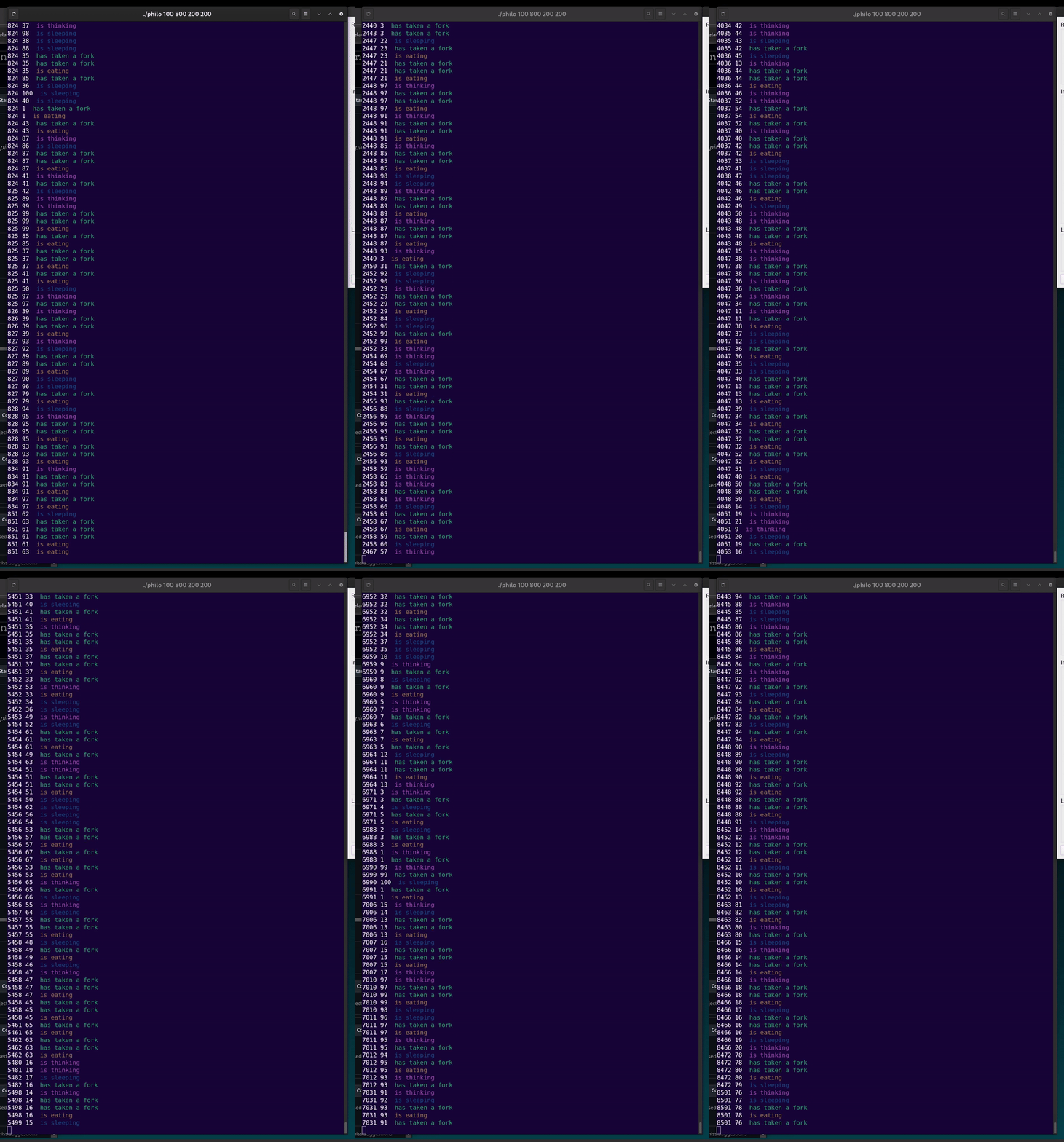
Display a log of actions:
- A philosopher takes a fork.
- A philosopher starts eating.
- A philosopher starts sleeping.
- A philosopher starts thinking.
- A philosopher dies.
$ ./philo 5 800 200 200This command will simulate 5 philosophers with:
A time to die of 800 ms.
A time to eat of 200 ms.
A time to sleep of 200 ms.
$ ./philo 5 800 200 200 7
This version includes the optional argument, requiring each philosopher to eat 7 times before stopping. Key Constraints
Philosophers must not die due to starvation unless specified by the parameters.
Use pthread_mutex to manage forks and protect shared resources.
Use gettimeofday or similar functions for time tracking.
Avoid busy waiting (use usleep for precision delays).
##Bonuses
If the mandatory part is completed perfectly, consider the following bonus features:
Implement the program using processes instead of threads (philo_bonus).
Use semaphores instead of mutexes for synchronization.
Enhance performance for larger numbers of philosophers and forks.
Bonus files should be named with the _bonus suffix. Key Concepts to Master
Multithreading: Using pthread_create and pthread_join to create and manage threads.
Mutexes: Protect shared resources and avoid race conditions using pthread_mutex.
Deadlocks: Prevent scenarios where two or more threads wait indefinitely for resources.
Time Management: Use gettimeofday for accurate timing of philosopher actions.
Synchronization: Coordinate actions between threads to ensure proper behavior.
Example Output
0 1 has taken a fork
0 1 has taken a fork
0 1 is eating
200 1 is sleeping
400 1 is thinking
This log represents a single philosopher taking forks, eating, sleeping, and thinking, all with timestamps in milliseconds.
-
🇬🇧 This project has an educational purpose and you should under no circumstances copy and paste. Cheat is bad. Dont cheat
-
🇫🇷 Ce projet a un but educatif et vous ne devez en auccun cas faire du copier coller. Tricher c'est mal. Ne trichez pas
©42Perpignan(bepoisso)