An embedded-first Clojure interpreter for microcontrollers (ESP32) and desktop platforms (macOS, Linux). Written in pure C99/C11 for maximum portability and minimal resource usage.
- C Compiler: GCC 4.9+ or Clang 3.5+ (C99/C11 support)
- CMake: 3.10+ for build system
- Make: GNU Make or compatible
- Git: For version control and cloning
# Install Xcode Command Line Tools
xcode-select --install

# Or install via Homebrew
brew install cmakeFollow the Clojure language as good as possible. Maximum compatibility with standard Clojure features, syntax, and behavior.
- Basic UTF-8 Support: Unicode character handling for international text
- REPL Line Editing: Interactive command-line editing with arrow keys (aka linereader)
- Multi-line REPL Editor: Multi-line input editing (requires terminal emulation / a real TTY)
- Error Messages with Source References: Detailed error reporting with line numbers and context
- Persistent Collections: Inefficient, partially implemented vectors, maps, and sequences
- Clojure-Compatible: Standard Clojure syntax (
*ns*,def,fn, etc)
- Embedded Target: ESP32 microcontrollers
- Pure C99/C11: No POSIX-only features for embedded compatibility
- Manual Reference Counting: Predictable memory behavior on embedded systems
- Small Binary: Optimized for embedded deployment
- Piezo-Focused Playback: Embedded-first sound runtime for piezo buzzers with matching desktop simulation on macOS
- Step Sequencer API:
tiny-fx.sound/play-steps!compiles note/rest step lists into efficient runtime tracks - Musical Timing: Supports millisecond durations plus musical values such as
:q,:e,:h, dotted notes, and tempo-driven playback - Melody/Backing Roles: Lead voice plus backing voices can be described declaratively with per-role channel and volume settings
- Host Debugging Hooks: Desktop status/debug helpers make it easy to validate audio behavior without ESP32 hardware
- Scene Graph Primitives: Groups, polylines, triangles, text, transforms, and styles can be composed into layered scenes
- Timeline Animation: Transform, style, and text fields support keyframe timelines with interpolation, looping, and easing
- Slot-Based Renderer:
FrameSceneslots provide z-ordering, clip rectangles, guard pixels, and efficient dirty-rect rerendering - Spatial Events: Collision and proximity rules publish host/runtime events for gameplay and interaction logic
- Runtime Introspection: Renderer state and timeline progress can be queried from Clojure for debugging, tooling, and tests
Tiny-CLJ uses a single build/ directory for all build configurations. The build type is specified when configuring CMake:
# Debug Build (default, includes debugging symbols and memory profiling)
cmake -DCMAKE_BUILD_TYPE=Debug -B build
cmake --build build

# Release Build (optimized for performance)
cmake -DCMAKE_BUILD_TYPE=Release -B build
cmake --build build

# Embedded Build (ultra-compact embedded configuration)
cmake -DCMAKE_BUILD_TYPE=Embedded -B build
cmake --build build
Note: All executables are placed in the build/ directory. The build type and configuration information is displayed when starting the REPL or running unit tests.
For size comparisons, use a Release (or Embedded) build. Debug builds are much larger.
./scripts/measure_esp32_size.sh build-releaseThis repo pins ESP-IDF v5.3.x as a git submodule under external/esp-idf so contributors can reproduce the ESP32 toolchain setup.
# 1) Fetch submodules (required once after clone)
git submodule update --init --recursive external/esp-idf

# 2) Download ESP-IDF tools/toolchains into a repo-local directory (./external/)
./scripts/setup_esp_idf.sh

# 3) Activate ESP-IDF environment (adds xtensa-esp32-elf-* tools to PATH)
source ./scripts/esp_env.sh

# Verify tools
which xtensa-esp32-elf-gcc
which xtensa-esp32-elf-size
With the ESP-IDF environment active, you can run the flash-tree size accounting script:
external/flash-tree/scripts/size_report_esp32.shPreferred (build + flash in one go, uses repo-local ESP-IDF env):
./build_idf.sh --flashIf the build already exists in the centralized build directory, flash it via idf.py:
cd esp32-idf
source ../scripts/esp_env.sh
idf.py -B ../builds/esp32-idf/build -p PORT flash
Lowest-level alternative (use the generated flash arguments):
cd builds/esp32-idf/build
python -m esptool --chip esp32 -b 460800 --before default_reset --after hard_reset write_flash "@flash_args"# REPL (shows build information at startup)
./build/tiny-clj-repl
# Vector game demo / host viewer
./build/game-demo
# Unit Tests (shows build information at startup)
./build/unit-tests
# Examples
./build/tiny-clj-repl --no-core -e "(+ 1 2)"
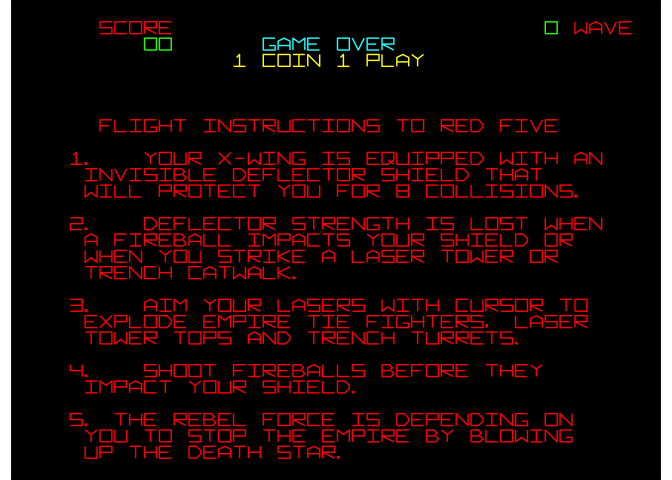
./build/tiny-clj-repl -f program.cljThe vector game demo uses a monospace single-stroke "Star-Wars arcade" font
for uppercase letters and digits (A-Z, 0-9). The glyph data is derived from
the open-source arcadefont project (MIT license):
- https://github.com/coolbutuseless/arcadefont
- https://raw.githubusercontent.com/coolbutuseless/arcadefont/master/man/figures/README-starwars-1.png
Build information (type, date, compiler, enabled features) is automatically displayed:
- REPL: When starting the REPL
- Unit Tests: When running unit tests
This helps identify which build configuration is currently active and how it was built.
- Core Types:
CljObjectwith specific structs for vectors, lists, maps, strings, symbols, exceptions - Evaluation: Simple list evaluation with C-implemented built-ins
- Parser: Tokenization and AST parsing into
CljObjectstructures - Memory: Manual reference counting with
retain,release, andautoreleasepools - REPL: Supports
--no-core,-e/--eval, and-f/--filefor scripted evaluation
Feature flags are compile-time defines. All feature toggles are positive *_ENABLED macros (use 0/1). DEBUG is separate.
Common flags:
META_ENABLED(metadata support)MEMORY_PROFILER_ENABLED(compile the memory-profiler implementation)MEMORY_PROFILING_ENABLED(activate profiling hooks/macros)LINE_EDITING_ENABLED(REPL line editor)STRING_FORMATTING_ENABLED(formatted exceptions viavsnprintf)ERROR_MESSAGES_ENABLED(full error message strings)COMPLEX_PARSING_ENABLED(vector/map parsing helpers)REPL_ENABLED(REPL features; embedded builds typically set0)
Note: ZOMBIE_ENABLED is a debug aid for lifetime bugs (does not reflect real freeing).
Tiny-CLJ aims to follow Clojure closely, but there are some intentional differences:
- Compile-time macroexpansion argument cap: during compile-time macroexpansion, Tiny-CLJ currently passes at most 20 arguments to the macro function; additional arguments are ignored. Clojure does not impose such a cap.
See docs/ directory for detailed documentation:
ROADMAP.md- Planned work and statusDEVELOPMENT_INSIGHTS.md- API design and memory managementMEMORY_POLICY.md- Memory management guidelinesPERFORMANCE_GUIDE.md- Performance optimizationERROR_HANDLING_GUIDE.md- Exception handlingTESTING_GUIDE.md- Unity test framework and debuggingRELEASE_NOTES.md- Version history and changesRC-COW.md- Reference counting and copy-on-write implementationMEMORY_PROFILER.md- Memory profiling and leak detectionSOUND_DSL.md- Sound step-sequencer DSL and melody/backing optionsSOUND_USER_GUIDE.md- Practical guide for composing piezo-friendly musicVECTOR_SCENE_FIXED_FIRST.md- Fixed-point vector scene/rendering notes
- Keep the core small and clean
- Favor small, focused PRs with tests and benchmark updates
- Follow English documentation standards