



Claude Code forgets what it was doing after the context is compacted. This fixes that.
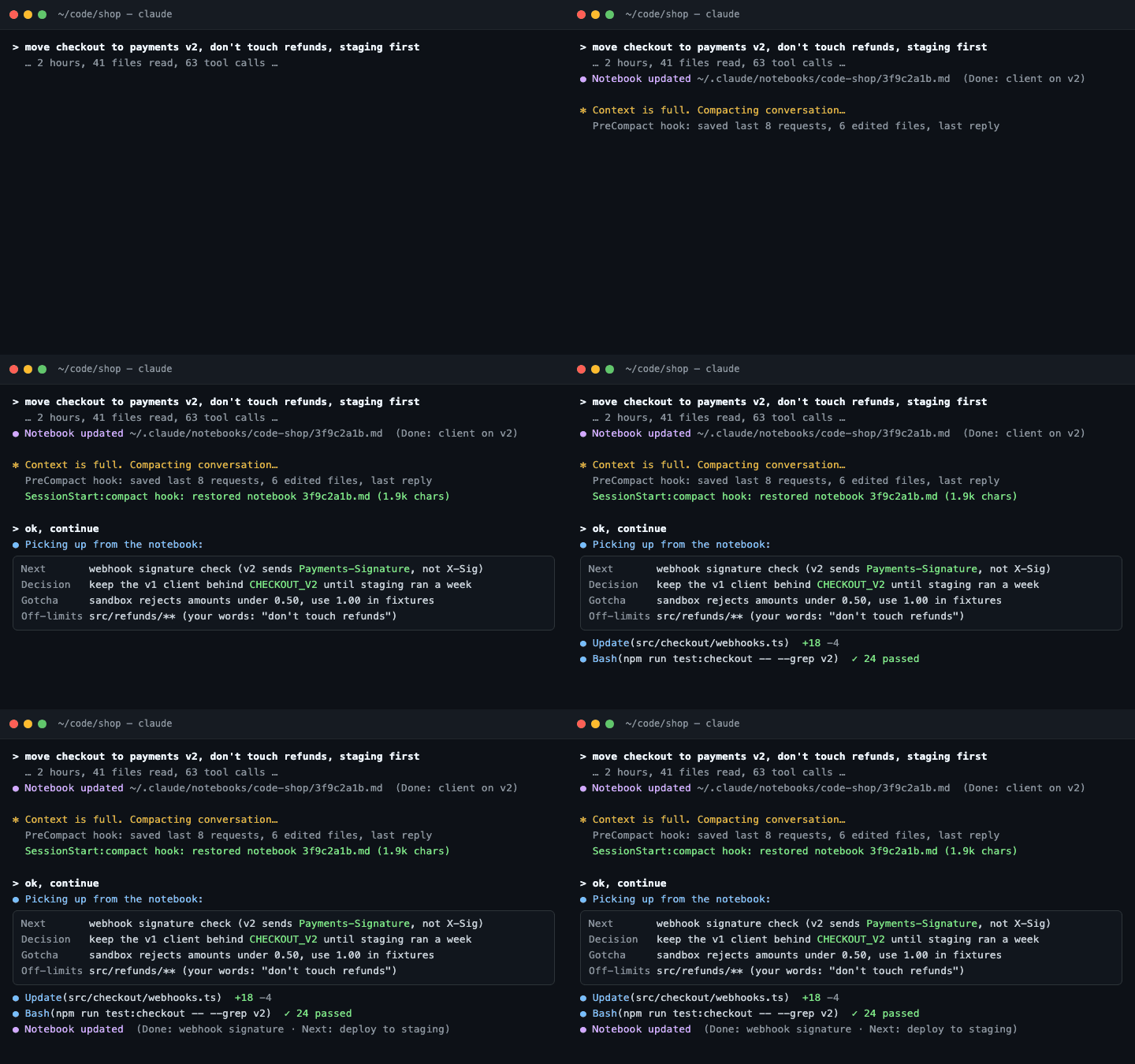
Two hours into a task, the context fills up and gets compacted. The summary keeps the big picture but drops the details: the file you agreed not to touch, the command that finally worked, the decision you made an hour ago, what was next. Claude carries on with a confident, slightly wrong idea of where you were.
claude-code-notebook gives every session a small Markdown notebook and two hooks:
- Before compaction it saves your last requests, the files edited and Claude's last reply into the notebook (secrets masked).
- After compaction or resume it puts the whole notebook back into Claude's context, so work continues from what was written down, not from what the summary remembered.
- At startup it tells Claude where the notebook is and asks it to keep it updated, and lists notebooks other sessions left open in the same project.
npx claude-code-notebook installRestart Claude Code. That's it.
- Adds a
SessionStartand aPreCompacthook to~/.claude/settings.json(backup kept assettings.json.bak). Your other hooks are left alone. --projectwrites./.claude/settings.jsoninstead,--dry-runshows the change and writes nothing.- The hooks run a local copy in
~/.claude/claude-code-notebook/, so there is nonpxcall (and no network) on every session. npx claude-code-notebook uninstallremoves the hooks. Notebooks stay where they are.
Notebooks live in ~/.claude/notebooks/<project>/<session>.md, outside your repo, so nothing ends up in git by accident.
# Migrate checkout to the new payments API

Session `3f9c2a1b` · started 2026-03-14 10:02

## Goal (in the user's words)
"Move checkout to v2 without touching the refund flow, staging first."

## Files, links, commands
- src/checkout/client.ts, src/checkout/webhooks.ts
- `npm run test:checkout -- --grep v2`

## Done
- client switched to v2, tests green

## Next
- webhook signature check (v2 uses a different header)

## Decisions
- keep v1 client behind a flag until staging has run a week

## Gotchas
- sandbox rejects amounts under 0.50

<!-- notebook:auto -->
## Before compaction (2026-03-14 12:41, auto)
### Last 8 user requests (oldest first)
...
### Files edited this session
...
<!-- /notebook:auto -->
Claude writes the sections at the top. The block at the bottom is written by the hook and replaced on every compaction, so the file does not grow forever.
| Command | |
|---|---|
npx claude-code-notebook list |
open notebooks for the current folder |
npx claude-code-notebook done <id> |
move a finished notebook to archive/ |
npx claude-code-notebook path |
print the notebook folder for the current folder |
Environment variables, all optional:
| Variable | Default | |
|---|---|---|
CLAUDE_NOTEBOOK_DIR |
~/.claude/notebooks |
where notebooks are kept |
CLAUDE_NOTEBOOK_MAX_CHARS |
20000 |
larger notebooks are truncated when restored (Claude is told the full path) |
CLAUDE_NOTEBOOK_REQUESTS |
8 |
user requests saved before compaction |
CLAUDE_NOTEBOOK_OPEN_DAYS |
7 |
how far back "open notebooks" are listed at startup |
CLAUDE_NOTEBOOK_NUDGE |
on |
off = don't ask Claude to keep a notebook, only restore existing ones |
- Local only. No network calls, no telemetry. The hooks read the transcript Claude Code already keeps on your disk and write Markdown next to it.
- Secrets are masked before anything is written: API keys (Anthropic, OpenAI, GitHub, GitLab, Slack, AWS, Google, npm), JWTs, bearer tokens,
PASSWORD=/TOKEN=style assignments, private keys and credentials inside URLs. It's pattern-based, so don't paste production secrets into chats anyway. - Notebooks are created with
0600permissions, outside your repository. - A hook that fails prints
{}and exits 0. It can never block or break a session.
Claude Code passes session_id, transcript_path, cwd and source (startup, resume, clear, compact) to SessionStart hooks and lets them add text to the context through additionalContext. PreCompact runs right before compaction. That's all this uses: about 400 lines of plain Node.js, no dependencies.
Isn't this what CLAUDE.md is for? CLAUDE.md is for things that are always true about a project. A notebook is the live state of one task: what's done, what's next, what you decided ten minutes ago.
Does it cost tokens? Only the notebook text that's restored (capped by CLAUDE_NOTEBOOK_MAX_CHARS). That's usually far less than re-explaining the task.
Several sessions in the same repo? Each session has its own notebook. At startup, Claude sees the titles of the others and can pick one up if you ask it to.
MIT